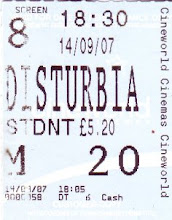
Binary Opposites - Claude Levi-Strauss
Good vs. Evil
Innocence vs. Corrupt
Sanity vs. Insanity
In control vs. Subservient
Drugged vs. Sober
Action + Enigma Codes - Roland Barthes
Action codes - Events leading to other events, the audience wonders what will happen next
She fell over - So, will he catch her now?
He has caught her - Will he kill?
Enigma codes - The audience asks the reason for an event
Why she on the floor
Why she is wearing a silk, white dress
Why she appears to be druggd
Narrative Structure - Tzvetan Todorov
It follows a different structure depending who you are viewing the situation from, red is the girl/rest of the world, blue is the villain.
Equilibrium - The film goes straight into the diruption
Disruption
- This young girl being captured - also outside of film time (happened before)
- Also the fact that she has obviously escaped
Recognition of disorder
- The police are looking for her (news report)
- The villain has come after her - he noticed she was gone
Attempt to repair
- She has escaped
- He recaptured her and then killed her
Showing posts with label Theories. Show all posts
Showing posts with label Theories. Show all posts
Thursday, January 24

Monday, October 29
Techniques: Continuity Editing
For all films with all genres in order to make it seem real to the audience and to make the action seem continuous there are certain rules/techniques that a film maker must follow. These rules ensure that the film seems to be in real time.
Rules
Camera

30 Degree Rule
If the camera switches shot but has more or less the same framing (i.e. changes by less than 30 degrees) then the camera seems to jump and it makes the clip seem jumpy and amateur.
Eyeline Match
This ensures that the clip is realistic, so for example if one character is tall than the other, the short one is seen to be looking up and the taller one down.
Match On Action
During action, for example a car moving or a person running, if you decide to cut to another angle or distance then it is important that in the second shot the car/person appears to have moved. Otherwise the action (car moving/person running) seems to repeat.
Shot/Reverse/Shot
This rule is for shooting a conversation
1st shot: Master shot - both characters
2nd shot: CU character 1
3rd shot: CU character 2
Further shots: BCU to show emotion MS can also be used
Editing
Transitions
Rules
Camera
Shot Order
So that it makes sense you need to move your audience across space smoothly by using a logical order, for example:
LS to MS to CU
Jumping straight from first to last is a little disorientating and should only be used to effect
180 Degree Rule
In a scene there is a 180 degree line which the camera goes up and down but does not actually cross, this is one rule which is never broken because the effect it produces is only confusion. It is mainly applicable during conversations because if the camera crosses the line the 2 subjects appear to be looking in the same direction.
30 Degree Rule
If the camera switches shot but has more or less the same framing (i.e. changes by less than 30 degrees) then the camera seems to jump and it makes the clip seem jumpy and amateur.
Eyeline Match
This ensures that the clip is realistic, so for example if one character is tall than the other, the short one is seen to be looking up and the taller one down.
Match On Action
During action, for example a car moving or a person running, if you decide to cut to another angle or distance then it is important that in the second shot the car/person appears to have moved. Otherwise the action (car moving/person running) seems to repeat.
Shot/Reverse/Shot
This rule is for shooting a conversation
1st shot: Master shot - both characters
2nd shot: CU character 1
3rd shot: CU character 2
Further shots: BCU to show emotion MS can also be used
Editing
Transitions
- Cuts are most common for seamless movement from one shot to another, creates pace and rhythm
- Dissolves provide a slow and relaxing atmosphere (sometimes for a montage effect). Can also be used to show time moving forward and to show a relationship between 2 shots.
- Fading (up/out/to black/from black) shows a significant amount of time passing
- Wipes aren't conventionally used in film, mainly for children's television
Sound
Diegetic
This heightens the realism of the film for the audience as it makes it seem more like the real world
Non-Diegtic
Music can alter the mood dramatically, and is particularly effective at creating suspense because it lets the audience know that something is about to happen. Voice over's aren't very common in films but if they are present they help the audience understand/empathise.
Sound Bridge
This is a way to link 2 scenes quite effectively. It is when the picture and diegetic sound change at different times. Conventionally the sound from the second scene is heard before the picture is shown.
Syd Field's Theory: Fatal Attraction
Applying Syd Field's theory to Fatal Attraction:
Act 1
The audience are shown Dan Gallagher (Michael Douglas) is normal caring husband with a perfect life with a wife (Anne Archer) and children.
The main hook for the audience in the first 30/40 minutes is that Dan risks all of this by sleeping with Alex Forrest (Glenn Close), but mainly it is plot point 1...
Plot point 1 - Alex slashes her wrists, this is when the story changes dramatically as Dan realises just how serious this little 'fling' has become.
Act 2
Alex starts to stalk Dan despite his attempts to move house and change his number, to the extent that she feigns pregnancy (possibly real) and also befriends his wife.
Plot point 2 is the boiling of the bunny, this forces Dan to realise that Alex has to be stopped before anyone is harmed and that he can't really do this by simply talking to her.
Act 3
The final confrontation is physical and ends with a struggle between Dan, Alex and Dan's wife, where Alex tries to stab both of them and finally Dan's wife shoots Alex.
Act 1
The audience are shown Dan Gallagher (Michael Douglas) is normal caring husband with a perfect life with a wife (Anne Archer) and children.
The main hook for the audience in the first 30/40 minutes is that Dan risks all of this by sleeping with Alex Forrest (Glenn Close), but mainly it is plot point 1...
Plot point 1 - Alex slashes her wrists, this is when the story changes dramatically as Dan realises just how serious this little 'fling' has become.
Act 2
Alex starts to stalk Dan despite his attempts to move house and change his number, to the extent that she feigns pregnancy (possibly real) and also befriends his wife.
Plot point 2 is the boiling of the bunny, this forces Dan to realise that Alex has to be stopped before anyone is harmed and that he can't really do this by simply talking to her.
Act 3
The final confrontation is physical and ends with a struggle between Dan, Alex and Dan's wife, where Alex tries to stab both of them and finally Dan's wife shoots Alex.
Thursday, October 18
Another Narrative Theory
3 Act Plot Structure - Syd Field
Act 1
During in the first 10 minutes the audience decides whether or not they like the film
Therefore they need to be shown/given a reason why the should care - like a hook
Then for the rest of the first 30 mins we learn the nature of the problem
Plot point 1 (particularly important points in the story, which alters the general dynamic of the film - they occur 3 times, in between acts and one in the middle)
Act 2
The main characters fight their enemies helplessly, in more and more extremely problematic situations
There is then normally a point where the situation begins to improve - possibly the protagonists win a small battle, but there is still a long way before a resolution.
Plot point 2 - the protagonist realises they have been tackling the problem in entirely the wrong way, this then leads into act 3
Act 3
The hero takes control and will normally battle the enemy on their own territory
Act 1
During in the first 10 minutes the audience decides whether or not they like the film
Therefore they need to be shown/given a reason why the should care - like a hook
Then for the rest of the first 30 mins we learn the nature of the problem
Plot point 1 (particularly important points in the story, which alters the general dynamic of the film - they occur 3 times, in between acts and one in the middle)
Act 2
The main characters fight their enemies helplessly, in more and more extremely problematic situations
There is then normally a point where the situation begins to improve - possibly the protagonists win a small battle, but there is still a long way before a resolution.
Plot point 2 - the protagonist realises they have been tackling the problem in entirely the wrong way, this then leads into act 3
Act 3
The hero takes control and will normally battle the enemy on their own territory
Thursday, October 11
Applying theory: Primal Fear
My dad recommended Primal Fear for me to watch because the acting is amazing in it, it is a thriller but a mixture of psychological and courtroom.
It was one of the most fantastically enthralling and incredible films i have ever seen - definitely the best thriller - so therefore i wanted to study it somehow and i decided to apply the narrative theories to it:
Binary Opposites
There are mainly only opposite from the genre psychological/courtroom thriller
Sanity vs. Insanity - very very important
Innocent vs. Guilty - typical of courtroom thrillers
Right vs. Wrong - always a sense of this with murders
Action/Enigma Codes
There isn't really a sense of action codes playing much of a part in this film - obviously events lead to other events and there are of course examples of it, but the film isn't particularly suspenseful for the large part so it doesn't keep the audience wondering and guessing.
Although one very good example is in the final courtroom scene when the audience guesses that the Gere is trying to get 'Roy' to come out of Norton and it keeps you on the edge of your seat because you really want it to happen - you want to know if his heckling will lead to Norton's other personality coming out.
There are a lot more enigma codes than action, they don't create instant suspense but more of an ongoing questioning int he audience's mind:
- Who killed the Archbishop?
- If it was Aaron then why?
- What are the reasons behind his schizophrenia?
The brilliant thing about this film is that even thought there are lots of questions, the audience thinks that they have it all sussed out right up until the last scene when the biggest of twists is unveiled - one which i don't think anyone would have see coming. It turns out that 'Aaron' never really existed, the personality of 'Roy' is who he actually is, and he just pretended to have schizophrenia to get away with the murder.
Narrative Structure
1.) Equilibrium - The Archbishop is alive and well
2.) Disruption - He is brutally murdered/Aaron is blamed
3.) Discovery of event - Murder is overheard by postman
4.) Attempt to repair - Trying to bring killer to justice/free Aaron
5.) New equilibrium - It is discovered who murdered him/also that he wasn't such a saint as he sexually abused the altar boys
The new equilibrium is certainly different because lots of secrets have come out - the archbishop was a sexual abuser/also that he died to begin with/Aaron is no longer a sweet altar boy.
Folk Tales Character Types
It was one of the most fantastically enthralling and incredible films i have ever seen - definitely the best thriller - so therefore i wanted to study it somehow and i decided to apply the narrative theories to it:
Binary Opposites
There are mainly only opposite from the genre psychological/courtroom thriller
Sanity vs. Insanity - very very important
Innocent vs. Guilty - typical of courtroom thrillers
Right vs. Wrong - always a sense of this with murders
Action/Enigma Codes
There isn't really a sense of action codes playing much of a part in this film - obviously events lead to other events and there are of course examples of it, but the film isn't particularly suspenseful for the large part so it doesn't keep the audience wondering and guessing.
Although one very good example is in the final courtroom scene when the audience guesses that the Gere is trying to get 'Roy' to come out of Norton and it keeps you on the edge of your seat because you really want it to happen - you want to know if his heckling will lead to Norton's other personality coming out.
There are a lot more enigma codes than action, they don't create instant suspense but more of an ongoing questioning int he audience's mind:
- Who killed the Archbishop?
- If it was Aaron then why?
- What are the reasons behind his schizophrenia?
The brilliant thing about this film is that even thought there are lots of questions, the audience thinks that they have it all sussed out right up until the last scene when the biggest of twists is unveiled - one which i don't think anyone would have see coming. It turns out that 'Aaron' never really existed, the personality of 'Roy' is who he actually is, and he just pretended to have schizophrenia to get away with the murder.
Narrative Structure
1.) Equilibrium - The Archbishop is alive and well
2.) Disruption - He is brutally murdered/Aaron is blamed
3.) Discovery of event - Murder is overheard by postman
4.) Attempt to repair - Trying to bring killer to justice/free Aaron
5.) New equilibrium - It is discovered who murdered him/also that he wasn't such a saint as he sexually abused the altar boys
The new equilibrium is certainly different because lots of secrets have come out - the archbishop was a sexual abuser/also that he died to begin with/Aaron is no longer a sweet altar boy.
Folk Tales Character Types
This film is a good example of when directors/writers mess with the conventions of characters - and therefore they become very obvious to the audience.
Due to the fact that the discovery of Aaron's non-existent schizophrenia changes the dynamic of the film and the audience's perceptions so much, there are 2 different sets of the 8 character types established; before we discover Aaron was lying, and after.
Before
- The Villain: the prosecutor
- The Hero: there are 2 - the Lawyer (Vail) and Aaron
- The Donor: the second altar boy who tells of the sex tape
- The helper: Vail's assistant working at his firm
- The princess: there isn't really a princess here, unless you count the prosecutor who seems to have a past with Vail
- Her father - as a courtroom thriller there isn't so much a reward for anyone except justice, so perhaps the judge is the father here
- The Dispatcher: in this case, is the lawyer's craving for fame that sends him on his way
- The false hero: there isn't one just yet.
After
- The Villain: Aaron - because he really did commit the murder in a sane state of mind
- The Hero: the Lawyer - because he trusted + believed (and clearly Aaron is no longer a hero)
- The princess: there isn't really a princess here, unless you count the prosecutor who seems to - The false hero: is Aaron also as we are lead to believe he is a hero for all except 5 minutes of the film
The hero, turned false hero at the end, really messes with the audiences head and indeed the real hero (Vail). I think this rule is the one which is most often broken by directors/writers because it is the most effective at shocking/thrilling and making a great statement.
Narrative Theories: A Brief Summary
Binary Opposites - Claude Levi-Strauss
Claude decided that they were a good way to understand the production of meaning within a narrative - and that it made it easier for the audience to understand and empathise.
A very common example is Good vs. Evil
Each genre also has their own binary opposites - for example Westerns often have Sheriff vs. Outlaw
Action/Enigma Codes - Roland Barthes
Action + Enigma codes are narrative codes which films are made up of - they are the 2 ways in which suspense is created.
Action Codes refer to actions - events leading to other events, the suspense is created by the audience wondering what the next event will be.
For example, in Disturbia when the villain realises Kale is watching him, we wonder what is going to do.
Enigma codes raise questions - the audience asks the reason for an event.
For example, in Disturbia we wonder why was there a blood smear on the window?
Narrative Structure - Tzvetan Todorov
1.) The fictional world begins with equilibrium
2.) Then it suffers a disruption
3.) A new equilibrium is produced
The 5 stages the narrative can go through is circular (not linear). The plot/narrative is driven by attempts to restore the equilibrium.
1.) Equilibrium
2.) Disruption - event
3.) Recognition of disorder
4.) Attempt to repair
5.) New equilibrium is established
However, the final equilibrium is never the same as the first, through the disruption to characters or situations events happen which cannot be undone - for example a murder. And the disruption which occurs is always out of the ordinary frame work of the fictional world
Folk Tales Character Types - Vladimir Propp
He identified 8 common roles:
Claude decided that they were a good way to understand the production of meaning within a narrative - and that it made it easier for the audience to understand and empathise.
A very common example is Good vs. Evil
Each genre also has their own binary opposites - for example Westerns often have Sheriff vs. Outlaw
Action/Enigma Codes - Roland Barthes
Action + Enigma codes are narrative codes which films are made up of - they are the 2 ways in which suspense is created.
Action Codes refer to actions - events leading to other events, the suspense is created by the audience wondering what the next event will be.
For example, in Disturbia when the villain realises Kale is watching him, we wonder what is going to do.
Enigma codes raise questions - the audience asks the reason for an event.
For example, in Disturbia we wonder why was there a blood smear on the window?
Narrative Structure - Tzvetan Todorov
1.) The fictional world begins with equilibrium
2.) Then it suffers a disruption
3.) A new equilibrium is produced
The 5 stages the narrative can go through is circular (not linear). The plot/narrative is driven by attempts to restore the equilibrium.
1.) Equilibrium
2.) Disruption - event
3.) Recognition of disorder
4.) Attempt to repair
5.) New equilibrium is established
However, the final equilibrium is never the same as the first, through the disruption to characters or situations events happen which cannot be undone - for example a murder. And the disruption which occurs is always out of the ordinary frame work of the fictional world
Folk Tales Character Types - Vladimir Propp
He identified 8 common roles:
- The Villain
- The Hero - a character who seeks something - he is motivated by a lack of something (money/love). Sometimes not heroic in the conventional way - can be male/female courageous/cowardly
- The Donor - provides an object/information of value
- The helper - a sidekick aiding the hero
- The princess - hero's reward, an object of the villain's schemes. Princess could be male
- Her father - who rewards the hero
- The Dispatcher - sending the hero on his way
- The false hero
They become more interesting/noticeable when the rules are broken - they are only really noticed when they are broken. For example in psycho the character perceived to be the hero is killed in the first half an hour.
I'm planning to watch a film and try to apply these theories because in order to potentially break them for my thriller i will have to understand them. I am considering doing this to create more of a twist on convention and essentially more of 'a thrill' to the audience
Subscribe to:
Posts (Atom)